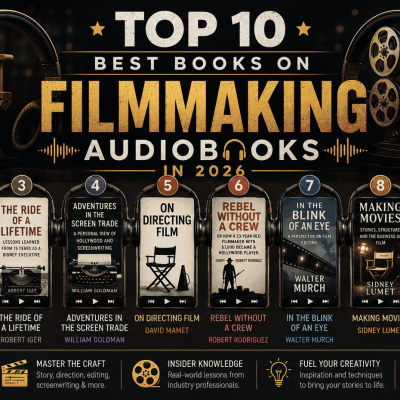

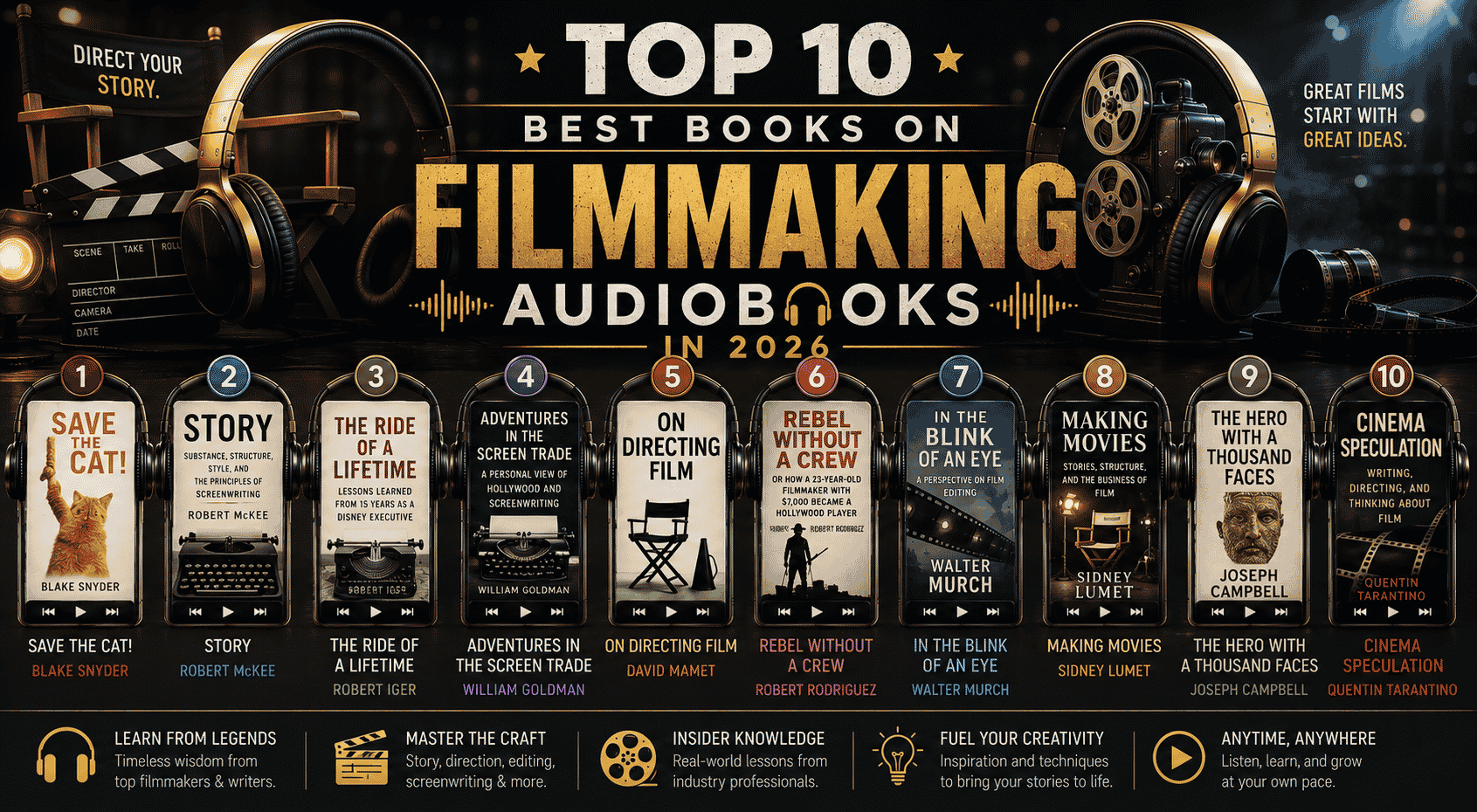
Top 10 Best Books on Film Audiobooks in 2026
Film audiobooks have become increasingly popular in 2026 because they allow listeners to explore the art, history, business, psychology, and storytelling techniques behind cinema while enjoying immersive narration and fascinating insider stories. Whether you are an aspiring filmmaker, screenwriter, actor, critic, or passionate movie fan, the best film audiobooks provide invaluable insight into filmmaking and cinematic storytelling.
This carefully researched list ranks the most influential, highly rated, and widely recommended film-related audiobooks available in 2026. These books cover directing, screenwriting, acting, Hollywood history, cinematography, film criticism, creativity, and the personal experiences of legendary filmmakers. Each audiobook was selected based on educational value, storytelling quality, narration performance, industry influence, and long-term relevance.
Author: Blake Snyder
Short Introduction
Save the Cat! is one of the most influential screenwriting audiobooks ever created. Blake Snyder breaks down commercial storytelling into accessible structures and practical techniques used throughout modern Hollywood filmmaking.
Detailed Review
Few film audiobooks have influenced modern screenwriting more than Save the Cat!. Blake Snyder transforms screenplay structure into an easy-to-understand system that aspiring writers can apply immediately.
The audiobook narration is energetic and conversational, making complex storytelling principles feel approachable and entertaining rather than academic. Snyder’s humor and enthusiasm help maintain strong pacing throughout.
The book’s greatest strength is clarity. Snyder explains concepts such as pacing, character likability, genre expectations, emotional beats, and narrative structure using memorable examples from successful films. His famous “beat sheet” system remains widely used by screenwriters today.
Unlike many theoretical film books, Save the Cat! emphasizes practical execution. Listeners gain tools they can directly apply to screenplays, novels, YouTube storytelling, and even content creation.
Some critics argue the structure can feel formulaic if followed too rigidly. However, for beginners and intermediate writers, the framework provides exceptional storytelling discipline.
This audiobook remains essential listening for anyone interested in screenplay structure and cinematic storytelling.
Key Lessons / Main Takeaways
- Strong screenplay structure matters
- Emotional pacing drives audience engagement
- Character likability affects storytelling
- Genre expectations influence success
- Practical frameworks improve writing discipline
Pros
✓ Extremely practical storytelling advice
✓ Accessible for beginners
✓ Highly influential screenwriting system
Cons
✗ Can encourage formulaic storytelling
✗ Less emphasis on experimental cinema
Best For
Aspiring screenwriters, filmmakers, and storytellers.
Overall Rating
9.9/10
Author: Robert McKee
Short Introduction
Story explores the principles of screenwriting, narrative structure, character conflict, and cinematic storytelling through one of the most respected storytelling frameworks in film history.
Detailed Review
Robert McKee’s Story is widely considered one of the definitive works on narrative structure and screenwriting theory. Unlike simpler writing guides, this audiobook dives deeply into the emotional and philosophical foundations of storytelling.
The narration carries an intellectual and authoritative tone that fits McKee’s analytical teaching style perfectly. The audiobook rewards focused listening because the material is dense with storytelling insight.
McKee’s writing examines conflict, scene construction, emotional turning points, character desire, subtext, pacing, and thematic development in extraordinary detail. Rather than teaching formulas, he explains why stories emotionally affect audiences.
One of the audiobook’s greatest strengths is depth. McKee treats storytelling as both artistic expression and structural craft, helping listeners understand the psychology behind powerful narratives.
Some listeners may find the material academically demanding compared to lighter screenwriting books. However, serious filmmakers and writers will find immense long-term value in its concepts.
This audiobook remains foundational learning for serious storytellers.
Key Lessons / Main Takeaways
- Conflict drives compelling storytelling
- Structure shapes emotional impact
- Strong scenes create narrative momentum
- Character desire fuels drama
- Storytelling combines art and craft
Pros
✓ Deep storytelling analysis
✓ Influential film-writing philosophy
✓ Exceptional long-term educational value
Cons
✗ Dense and academically intense
✗ Requires focused listening
Best For
Serious screenwriters, filmmakers, and storytelling students.
Overall Rating
9.8/10
Author: Robert Iger
Short Introduction
This memoir explores Robert Iger’s leadership journey at Disney and the business decisions behind Pixar, Marvel, Star Wars, and modern entertainment expansion.
Detailed Review
The Ride of a Lifetime offers a fascinating behind-the-scenes look at the modern entertainment industry from one of Hollywood’s most influential executives.
The audiobook narration feels calm, professional, and reflective, fitting the memoir’s leadership-focused storytelling style. Iger’s business insights remain highly engaging even for listeners outside the corporate world.
The audiobook’s greatest strength is perspective. Iger explains the strategic thinking behind major entertainment acquisitions and creative partnerships while emphasizing leadership, communication, risk-taking, and innovation.
Film lovers gain valuable insight into how massive entertainment franchises evolve creatively and commercially. The audiobook also highlights the delicate balance between creativity and business leadership in Hollywood.
One of the most compelling aspects is Iger’s focus on emotional intelligence and calm decision-making under pressure.
Some listeners seeking purely artistic filmmaking discussion may prefer more creatively focused books. However, the business and leadership insights are extremely valuable for anyone interested in modern film industries.
Key Lessons / Main Takeaways
- Leadership shapes creative industries
- Strategic risk-taking drives growth
- Creativity and business must align
- Emotional intelligence matters in leadership
- Innovation requires long-term vision
Pros
✓ Excellent entertainment industry insight
✓ Strong leadership lessons
✓ Fascinating behind-the-scenes stories
Cons
✗ More business-focused than artistic
✗ Less technical filmmaking discussion
Best For
Film industry enthusiasts, entrepreneurs, and entertainment professionals.
Overall Rating
9.7/10
Author: William Goldman
Short Introduction
This legendary Hollywood memoir explores screenwriting, filmmaking, studio politics, and the unpredictable realities of the movie industry.
Detailed Review
William Goldman’s Adventures in the Screen Trade remains one of the most entertaining and brutally honest books ever written about Hollywood.
The audiobook narration captures Goldman’s wit, sarcasm, and storytelling energy beautifully. His conversational style makes listeners feel like insiders hearing industry secrets directly from a veteran screenwriter.
Goldman discusses famous films, failed productions, studio politics, script development, and creative uncertainty with remarkable honesty. His famous statement, “Nobody knows anything,” remains one of Hollywood’s most quoted observations.
The audiobook excels because it balances humor with serious industry insight. Goldman demystifies filmmaking while revealing how unpredictable creative success truly is.
One of the strongest aspects is authenticity. Rather than romanticizing Hollywood, Goldman presents filmmaking as chaotic, collaborative, political, and often irrational.
Some industry references may feel dated to younger listeners. However, the storytelling wisdom and insider perspective remain timeless.
This audiobook is essential listening for anyone fascinated by Hollywood history.
Key Lessons / Main Takeaways
- Hollywood success is unpredictable
- Collaboration shapes filmmaking
- Scripts evolve constantly during production
- Industry politics affect creativity
- Storytelling remains central to cinema
Pros
✓ Funny and insightful storytelling
✓ Honest Hollywood perspective
✓ Timeless industry wisdom
Cons
✗ Some outdated industry references
✗ Less technical filmmaking instruction
Best For
Film lovers interested in Hollywood history and screenwriting culture.
Overall Rating
9.6/10
Author: David Mamet
Short Introduction
David Mamet explores visual storytelling, editing, scene construction, and cinematic language through a minimalist philosophy of filmmaking.
Detailed Review
On Directing Film is one of the most intellectually sharp filmmaking audiobooks available. Mamet strips storytelling down to visual essentials, arguing that strong cinema depends on clear dramatic objectives rather than excessive dialogue or explanation.
The narration matches the audiobook’s concise and analytical style perfectly. Mamet’s directness creates an experience that feels disciplined and highly focused.
The audiobook emphasizes visual storytelling, editing logic, shot selection, and audience psychology. Mamet repeatedly stresses that every cinematic decision should serve dramatic tension and narrative clarity.
One major strength is efficiency. Unlike sprawling filmmaking books, this audiobook communicates profound ideas through concise examples and clear principles.
Listeners interested in directing, editing, and visual storytelling will find enormous value in Mamet’s perspective.
However, the audiobook’s minimalist philosophy may feel overly rigid for some creative listeners. It also assumes basic familiarity with cinematic language.
Still, this remains one of the most respected directing audiobooks ever produced.
.
Key Lessons / Main Takeaways
- Visual storytelling is central to cinema
- Every scene needs dramatic purpose
- Editing shapes audience emotion
- Simplicity strengthens storytelling
- Clear objectives improve direction
Pros
✓ Brilliant directing insights
✓ Concise and highly focused
✓ Excellent visual storytelling philosophy
Cons
✗ Very analytical approach
✗ Limited beginner-friendly explanations
Best For
Directors, film students, and visual storytellers.
Overall Rating
9.5/10
Author: Robert Rodriguez
Short Introduction
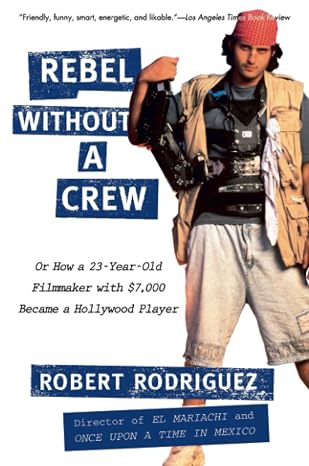
This inspiring memoir chronicles Robert Rodriguez’s journey creating his breakthrough film El Mariachi with almost no budget.
Detailed Review
Rebel Without a Crew remains one of the most motivating filmmaking audiobooks ever written for independent creators.
Rodriguez’s storytelling feels energetic, funny, and deeply personal. The audiobook captures the excitement, creativity, and chaos of guerrilla filmmaking extremely well.
The greatest strength is inspiration. Rodriguez demonstrates how passion, resourcefulness, and persistence can overcome financial limitations. His practical low-budget techniques remain surprisingly relevant for modern indie creators and online video producers.
The audiobook also reveals the realities of independent filmmaking, including exhaustion, uncertainty, technical improvisation, and creative problem-solving.
Listeners interested in YouTube filmmaking, indie cinema, or creative entrepreneurship will find enormous motivation here.
Some filmmaking technology references are dated because of changes in digital production. However, the creative mindset and determination remain timeless.
This audiobook continues to inspire new generations of filmmakers.
Key Lessons / Main Takeaways
- Creativity can overcome budget limitations
- Resourcefulness matters in filmmaking
- Persistence drives creative success
- Independent filmmaking requires flexibility
- Passion fuels long-term artistic growth
Pros
✓ Extremely inspiring storytelling
✓ Practical indie filmmaking lessons
✓ Funny and energetic narration
Cons
✗ Some outdated production references
✗ Less focus on large-scale filmmaking
Best For
Independent filmmakers and beginner creators.
Overall Rating
9.4/10
Author: Walter Murch
Short Introduction
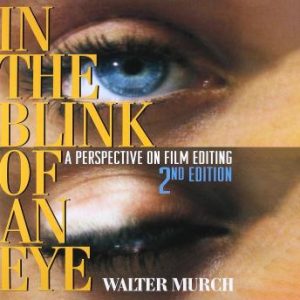
This influential audiobook explores the philosophy and psychology of film editing through the perspective of legendary editor Walter Murch.
Detailed Review
Walter Murch transforms editing into both technical craft and emotional art form in this deeply insightful audiobook.
The narration is thoughtful and reflective, matching the audiobook’s philosophical tone effectively. Murch explains editing concepts with unusual clarity and emotional intelligence.
The audiobook’s greatest strength is perspective. Rather than focusing solely on software or technical tools, Murch explores how editing shapes audience emotion, attention, rhythm, and meaning.
Listeners gain insight into why cuts work psychologically and how visual transitions affect emotional storytelling subconsciously.
The audiobook also discusses cinematic rhythm, sound design, visual continuity, and human perception in fascinating ways.
Some sections become abstract and philosophical rather than practical. However, serious filmmakers and editors will appreciate the intellectual depth greatly.
This audiobook remains essential learning for editors and cinematic storytellers.
Key Lessons / Main Takeaways
- Editing shapes emotional storytelling
- Rhythm influences audience engagement
- Visual transitions affect perception
- Simplicity often strengthens editing
- Film editing combines intuition and technique
Pros
✓ Deep editing philosophy
✓ Intelligent cinematic analysis
✓ Valuable emotional storytelling insight
Cons
✗ Abstract concepts occasionally
✗ Less software-focused instruction
Best For
Editors, filmmakers, and advanced film students.
Overall Rating
9.3/10
Author: Sidney Lumet
Short Introduction
Legendary director Sidney Lumet explains the practical realities of filmmaking, directing actors, production planning, and cinematic collaboration.
Detailed Review
Making Movies stands out because of its practical honesty and decades of filmmaking wisdom. Lumet explains how movies actually get made, from rehearsals and camera placement to scheduling and studio communication.
The audiobook narration feels calm, experienced, and highly educational, reflecting Lumet’s professional authority perfectly.
Lumet’s writing style is straightforward and highly accessible. He avoids unnecessary theory and instead focuses on practical filmmaking decisions and collaborative leadership.
One of the audiobook’s strongest aspects is realism. Listeners gain a genuine understanding of how directing involves balancing creativity, logistics, personalities, budgets, and time constraints simultaneously.
The audiobook also provides valuable insight into actor direction and production management.
Some listeners seeking artistic philosophy may prefer more theoretical books. However, the practical filmmaking knowledge is exceptional.
Key Lessons / Main Takeaways
- Directing requires strong collaboration
- Preparation improves filmmaking efficiency
- Actors need trust and communication
- Production logistics shape creativity
- Practical filmmaking differs from theory
Pros
✓ Practical filmmaking wisdom
✓ Accessible directing insights
✓ Valuable production knowledge
Cons
✗ Less theoretical depth
✗ Older industry examples occasionally
Best For
Aspiring directors and film production students.
Overall Rating
9.1/10
Author: Joseph Campbell
Short Introduction
This influential mythology audiobook explores the “hero’s journey,” a storytelling structure that shaped countless films including Star Wars and modern blockbuster cinema.
Detailed Review
Joseph Campbell’s legendary work remains one of the most influential books in storytelling and cinematic structure.
The audiobook narration carries a thoughtful and intellectual tone, fitting the mythological and philosophical material effectively.
Campbell explores recurring archetypes, narrative patterns, and symbolic journeys found throughout global mythology and storytelling traditions. These ideas later heavily influenced Hollywood storytelling structures.
One of the audiobook’s strongest aspects is thematic depth. Campbell explains why audiences emotionally connect with transformational stories across cultures and generations.
Listeners interested in screenwriting and film structure will quickly recognize how deeply the hero’s journey influenced blockbuster cinema.
The material can become academically dense and repetitive at times. However, the storytelling insights remain foundational for filmmakers and writers.
This audiobook remains essential for understanding cinematic mythmaking.
Key Lessons / Main Takeaways
- Universal story structures repeat across cultures
- Transformation drives emotional storytelling
- Mythology shapes modern cinema
- Archetypes influence audience psychology
- Symbolism deepens narrative meaning
Pros
✓ Highly influential storytelling theory
✓ Deep mythological insight
✓ Essential cinematic influence
Cons
✗ Academically dense sections
✗ Repetitive analysis occasionally
Best For
Screenwriters, storytellers, and mythology enthusiasts.
Overall Rating
9.0/10
Author:Quentin Tarantino
Short Introduction
Quentin Tarantino explores 1970s cinema, film criticism, filmmaking influences, and personal movie experiences through passionate essays and commentary.
Detailed Review
Cinema Speculation feels like spending hours discussing movies with an intensely passionate film obsessive. Tarantino’s enthusiasm for cinema drives every moment of this audiobook.
The narration captures Tarantino’s energetic personality, humor, and deep film knowledge effectively. His conversational style keeps the audiobook highly entertaining.
Rather than offering structured filmmaking lessons, Tarantino shares emotional reactions, historical context, industry analysis, and personal memories connected to classic films.
One major strength is passion. Tarantino communicates genuine love for cinema in a way that reminds listeners why movies matter emotionally and culturally.
The audiobook also provides fascinating insight into how filmmakers develop artistic taste and creative influences over time.
Some listeners may prefer more organized educational structure. However, film enthusiasts will appreciate the personality and enthusiasm tremendously.
This audiobook is a celebration of movie culture itself.
Key Lessons / Main Takeaways
- Film passion shapes artistic identity
- Cinema history influences modern filmmaking
- Personal taste affects creative vision
- Criticism deepens movie appreciation
- Great films inspire future filmmakers
Pros
✓ Highly entertaining film discussion
✓ Fascinating cinema insights
✓ Passionate storytelling energy
Cons
✗ Less structured educational format
✗ Heavy focus on specific film eras
Best For
Movie lovers and fans of film criticism and cinema history.
Overall Rating
8.9/10
Final Recommendation
Best for Beginners
- Save the Cat!
- Rebel Without a Crew
- Cinema Speculation
Best for Intermediate Listeners
- Adventures in the Screen Trade
- Making Movies
- The Ride of a Lifetime
Best for Advanced Readers
- Story
- On Directing Film
- In the Blink of an Eye
Conclusion
Film audiobooks in 2026 offer extraordinary insight into storytelling, directing, editing, screenwriting, Hollywood history, and cinematic creativity. Whether you dream of making movies, writing scripts, directing actors, editing films, or simply understanding cinema more deeply, these audiobooks provide timeless lessons from some of the industry’s most respected voices.
Listeners seeking practical screenwriting advice should begin with Save the Cat! or Story, while aspiring directors will benefit greatly from On Directing Film and Making Movies. Fans of Hollywood culture and filmmaking history should explore Adventures in the Screen Trade and Cinema Speculation, while independent creators will find endless motivation in Rebel Without a Crew.
Ultimately, the best film audiobook depends on your goals: creative inspiration, technical filmmaking knowledge, storytelling mastery, or deeper appreciation of cinema itself. These ten audiobooks represent the finest film-related listening experiences available in 2026 and remain essential resources for movie lovers and creators alike.